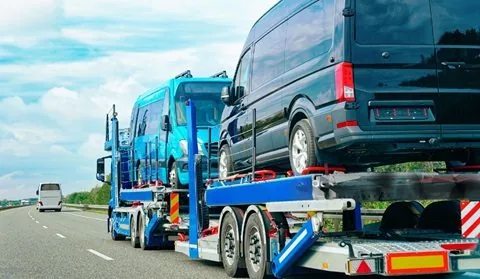
01Reserve a workable place for a Chicago vehicle handoff
A Chicago address needs more detail than a neighborhood name. Provide the street, ZIP code, building or business name, entrance, and a phone number for the person meeting the driver. Tell us whether the vehicle is at a high-rise, walk-up, two-flat, dealership, office campus, or industrial yard. A narrow alley, parked cars, garage height, loading dock schedule, or security desk may determine whether a car-hauling trailer can reach the address.
Ask management or the property owner where a commercial carrier may stop and whether loading requires advance approval. If the curb cannot accommodate the truck, identify a permitted wider location and confirm it with dispatch. Never assume a passenger-car parking space is adequate for loading equipment. Sending the exact handoff point up front helps avoid a driver circling downtown without a safe place to unload.
02Downtown buildings and residential blocks need different instructions
For a tower or office building, check whether vehicles must use a dock, freight entrance, loading bay, or reserved service area. Ask about clearance and appointment times. Security may require a carrier name or advance notice. For a neighborhood pickup, note one-way streets, parking restrictions, street cleaning, alley access, and the width available when cars are parked on both sides. A driveway can be useful only if a long trailer can enter and exit without blocking traffic.
If the carrier must meet you at a nearby public or private lot, confirm that commercial loading is permitted. Include the address and any gate instructions in the booking notes. Keep the receiver informed and reachable. A location change after dispatch may affect timing and route planning, so report it as soon as it is known.
03The Chicago route does not always end in Chicago
Many shipments connect the city with suburbs such as Evanston, Oak Park, Naperville, Schaumburg, or Aurora, while others cross Illinois or head to another state. Specify the real destination and ZIP code, not just a familiar metro area. If the vehicle is headed to a rural property or a small town downstate, provide the nearest community and the last road to the address. State whether a multi-car carrier can turn around and whether the site has a firm staging area.
For a delivery across state lines, identify the state and contact at the other end. If the recipient cannot meet the carrier, appoint an authorized local person before booking. A meeting point should be selected with permission and be reachable by both parties. These details make a quote reflect the trip instead of a city-center estimate.
04Industrial, dealer, and auction pickups need release readiness
A Chicago-area vehicle may be stored at a dealership, auction, repair shop, logistics yard, or fleet facility. Ask whether the car has been released and whether the carrier needs an appointment, gate code, badge, or paperwork. Provide stock or lot numbers, business hours, entry directions, and the direct line of the person who can authorize pickup. Do not rely on a general switchboard if the facility has a specific release desk.
Tell the coordinator if the vehicle is inoperable or has modifications that affect loading. Remove loose items, have keys ready, and document the car’s condition before it leaves the lot. If someone else attends, confirm they have authority and enough time for a walk-around. A truck should not be dispatched before the release requirements are understood.
05Plan for construction and traffic without an exact-hour assumption
Traffic through the city and on approach roads changes with construction, incidents, weather, and daily demand. IDOT publishes travel and construction resources that can help identify conditions near the planned move. Check current updates, but remember they cannot predict every building access delay or the future arrival of a carrier on a multi-stop route. Keep the car ready for the agreed window and answer calls when the driver is approaching.
If a street closure or loading reservation conflicts with arrival, work with dispatch on an alternate location or schedule. Share a hard deadline before booking, whether it is a lease turnover, auction cutoff, or work obligation. Ask what can be confirmed instead of arranging another commitment around an unverified arrival hour.
06Get the car ready and inspect it twice
Report whether the car starts, rolls, steers, and brakes. Disclose low clearance, custom wheels, body kits, mechanical issues, or accessories that should not remain attached. Remove personal property and loose items. Take photographs and review the carrier inspection with the driver before loading. Save the document and compare it at delivery. If the vehicle is at a garage, confirm the ramp and ceiling clearance; a transport rig will usually stage outside rather than enter a residential structure.
At delivery, ensure the receiver can see the car in adequate light and has time to note its condition. If you cannot be there, provide an authorized representative with the order details and inspection steps. Keep paperwork and contact dispatch promptly if the destination changes.
07Open or enclosed service should fit the access plan
Open transport places the vehicle on an uncovered trailer and is commonly selected for standard cars. Enclosed service uses a covered trailer and may suit a classic, collectible, luxury, or sensitive vehicle. Ask what is available for your route and dates. An enclosed trailer can require additional staging room, which is important on a narrow Chicago street or in a compact commercial lot.
Door-to-door means the closest safe, legal point the carrier can reach; it does not guarantee a loading zone, curb reservation, alley entry, or garage access. If an alternate site is necessary, obtain permission and settle the address before dispatch. A complete quote request includes car details, condition, both endpoints, service choice, and date range.
08Quote details that prevent a last-minute mismatch
Send the year, make, model, operability, pickup and delivery addresses, preferred transport service, and date range. Include a contact at both ends, loading permission, garage restrictions, building hours, and any facility release procedure. Ask what the price includes, how pickup timing is estimated, when payment is due, and what cancellation terms apply. If you need the vehicle by a deadline, explain why and ask whether the timing is achievable.
Before the driver arrives, make sure the handoff point is still available and legal. Keep the phone on, keys prepared, and the receiving person informed. If traffic or property access forces a change, send it through dispatch. A transparent plan makes city transport more predictable for the customer and carrier.