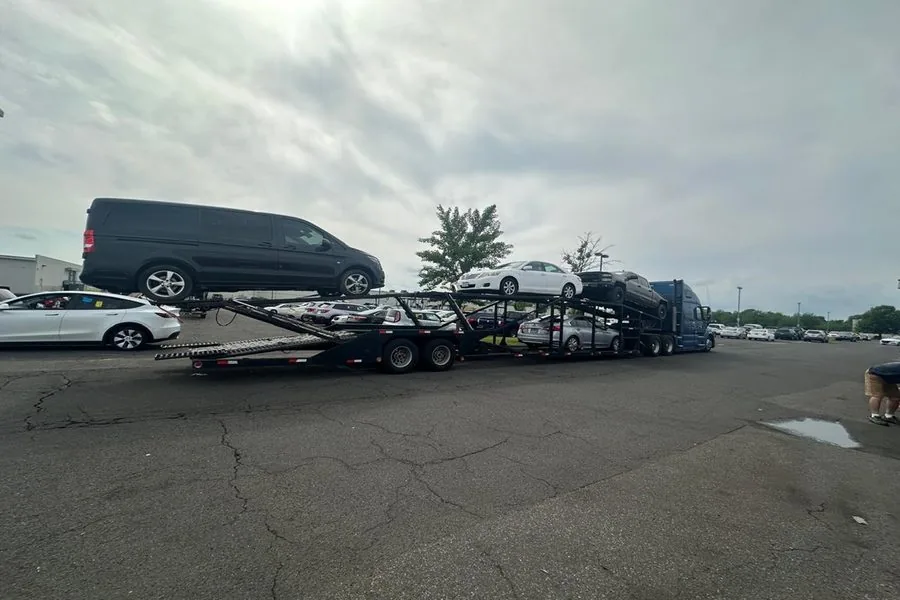
Get New Jersey car shipping arranged around your actual pickup, destination, and dates, with a clear quote and carrier support from booking to delivery.
Real, live reviews pulled directly from our Google Business Profile.
Loading reviews…
Call +1 (888) 719-5659 or use our instant online quote form — most routes are dispatched within 24–48 hours.
Get an Instant QuoteA New Jersey vehicle move might begin in a Hudson County apartment district, cross central commuter territory, end at a South Jersey home, or continue to a shore town. Give the exact municipality, ZIP code, street, and vehicle location at both endpoints. New Jersey’s dense network puts many towns close together, but the last few blocks can have different parking, gate, or truck access rules. Do not use “New York area,” “Jersey Shore,” or “near Philadelphia” in place of the actual street address. If the postal city differs from the town, add both.
Tell dispatch whether the car is at a residence, dealer, auction, campus, office, storage facility, or managed garage. Include loading hours, security check-in, clearance, gate rules, and any permit or appointment requirement. Explain if the carrier must use a particular entrance or meet at an alternate site. A busy curb is not automatically a viable loading location; confirm it is safe and legal to stop. If a private lot is needed, get permission and verify hours and turning room. Accurate endpoints and site notes help the provider plan for a real carrier route instead of a general map estimate.
Hudson, Bergen, Essex, and Passaic County addresses may involve apartment towers, one-way streets, loading docks, permit parking, and little room for a multicar trailer. Ask building management which entrance can accept commercial vehicles and whether a loading reservation is available. A residential garage may be too low or tight for a carrier. If the vehicle is stored below street level, arrange to bring it to an approved outdoor location. Give the driver the exact entrance and a contact who can open gates or meet at the curb.
A public-looking lot or nearby curb should not be treated as a loading zone without permission. Confirm any alternate site with its owner, and make sure there is space to inspect and turn. For a facility pickup, provide the stock number, appointment time, release authorization, and direct phone number. Traffic through the region can add variation to an arrival estimate, so use a realistic range unless a carrier confirms a firm appointment. NJDOT’s 511 information includes traffic incidents and conditions; review updates near the move and pass relevant changes to dispatch.
Many New Jersey shipments connect with New York, Pennsylvania, or Delaware, and the river crossings and regional approaches affect a carrier’s route. Identify which state holds each endpoint and provide ZIP codes. A destination in the New York metro is not necessarily within New York City; the exact borough, county, or suburb matters. Likewise, a South Jersey address may connect toward Philadelphia without being in the city. Dispatch should route for the carrier and trailer, not rely only on the quickest path shown for a passenger car.
If a bridge approach, construction zone, or incident changes the expected route, contact the coordinator and allow a revised window. Do not ask a driver to load from a shoulder, ramp, or tunnel queue. A safe alternate should be identified on a local street or approved property with sufficient space. Give the receiver directions to the agreed place and keep one contact available. The crossing may be a short part of the map distance but can materially affect appointment timing, so avoid promising a specific hour without carrier confirmation.
The central counties connect several major corridors and include suburban homes, business parks, distribution sites, and smaller communities. State whether the vehicle is near a highway interchange, in a managed complex, or on a local road beyond the main route. A workplace may direct customer traffic to one entrance and commercial vehicles to another. Confirm gate hours and whether the assigned carrier must be listed in advance. At a residential subdivision, make sure the street has room for a trailer to turn without blocking neighbors.
A shore destination may be subject to seasonal traffic, event congestion, or limited loading space compared with a central business park. Name the coastal town and confirm the property is ready and accessible. If a vacation home is closed, arrange for an authorized local contact to open it and receive the vehicle. A large truck should not be directed into a narrow street or resort lot without checking access. When a nearby authorized staging area is more practical, agree on it before dispatch and send the receiver the full address and arrival plan.
New Jersey moves can involve commuter peaks, shore travel, construction, and building loading windows. Give dispatch a pickup range and identify any immovable deadline. If a dealer, auction, storage yard, or apartment dock closes at a set time, ask how the carrier will handle a delay. Do not rely on an estimated drive time from a map as a confirmed delivery appointment. Leave time for the inspection and any required check-in.
NJDOT 511 provides traveler information, including incidents and traffic conditions. Check close to pickup or delivery and alert the provider if a major route change matters. It cannot tell you whether a private road is open or whether a building attendant will admit the carrier. Confirm that a local contact can verify access and stay reachable during the window. If an alternate is required, notify every party through dispatch. One current schedule is better than separate assumptions from the seller, buyer, and property manager.
Open carriers move many standard cars on uncovered trailers. Enclosed transport places the vehicle in a covered trailer and may be requested for classic, collector, luxury, or sensitive cars. Route, size, equipment, and dates affect availability. Disclose modifications, lowered clearance, oversized tires, roof accessories, and whether the car starts, rolls, steers, and brakes. A non-running vehicle may need specialized loading equipment; dispatch needs to know before assigning a carrier.
Provide the year, make, model, complete addresses, service preference, condition, and date range for a useful quote. Include garage limits, gate procedures, and the approved loading point. Door-to-door service reaches the nearest safe and legal point available; it does not promise entry into a secured complex, private garage, narrow block, or prohibited curb. Review what the price covers, pickup estimate, payment timing, and cancellation terms. If a destination or access plan changes, update the provider promptly so the agreement matches the actual move.
Photograph the vehicle before pickup in clear light, including the roof, panels, bumpers, glass, wheels, and existing marks. Remove personal belongings and have the keys ready. Walk around the car with the driver and compare its condition with the pickup report. Keep a copy and the carrier’s contact details. A dealer or auction should confirm release authorization, lot reference, and hours before the truck arrives.
At delivery, inspect before signing and add any concern to the paperwork. If a third party handles either end, send the order number, exact entrance, access plan, and authority to release or accept the car. Ensure the person can remain available for the arrival range. If a crossing, closure, or building rule changes the plan, communicate through dispatch and relay the same update to the receiver. An accurate condition record and a single set of instructions make a dense regional handoff easier to follow.
Newark and Jersey City service differs from central New Jersey and the southern counties around Cherry Hill. Turnpike traffic, shore-season travel, toll roads and apartment loading requirements can determine where a carrier can stop. Include the municipality, building access rules and a legal loading option near the address. For coastal destinations, give a date range that allows dispatch to work around peak traffic rather than assuming a precise arrival hour.
Learn more about open car shipping, enclosed car shipping and door to door transport, or request a free quote for your route.
Click any state to see local pickup & delivery details, or call +1 (888) 719-5659 for a route-specific quote.
Get an instant, no-obligation quote in minutes — licensed, bonded & insured nationwide.