Ship your car across Indiana with open or enclosed options, route-based pricing, and pickup coordination for your home or business move.
Real, live reviews pulled directly from our Google Business Profile.
Loading reviews…
Call +1 (888) 719-5659 or use our instant online quote form — most routes are dispatched within 24–48 hours.
Get an Instant QuoteIndiana’s position among Midwestern routes makes it a frequent through-state for vehicle carriers, but a quote still depends on the actual origin and destination. Indianapolis, Fort Wayne, South Bend, Evansville, Bloomington, and rural county addresses involve different distances and local approaches. Provide full street addresses and ZIP codes at both ends. If a vehicle is at a farm, auction, college, plant, or storage property, identify the site and the person who can release it.
I-65, I-69, I-70, and I-74 connect different parts of the state. Give the final road beyond the interstate and describe the gate, surface, grade, turning room, and loading space. If a carrier cannot safely access a private lane, select an approved meeting point and confirm the receiver can reach it. Naming an interstate or broad metro does not establish where a car can be loaded.
A shipment through the capital may use a major freeway corridor, but the car can be at a downtown building, suburban home, distribution center, or property beyond the beltway. Identify the municipality and entrance, not just “Indianapolis.” At a campus, business park, or apartment complex, ask where commercial vehicles may stage and whether a gate code or appointment is needed. Parking deck clearance and tight one-way access can rule out an otherwise convenient address.
When an alternate location is needed, confirm legal loading permission and provide the exact address. A customer should not meet the driver at an unapproved freeway shoulder or private lot. Keep local contact details and property instructions with the booking so dispatch can share a consistent route plan.
Gary, South Bend, Elkhart, and Fort Wayne are distinct endpoints even when a customer refers to a broader northern Indiana region. Include the city, state, ZIP, and exact facility or residence. A pickup near a rail or industrial site may have security and check-in procedures, while a home may have limited street parking or a narrow drive. Ask whether the receiving property admits a full carrier and where the vehicle can wait.
For a route continuing into Michigan, Illinois, or Ohio, identify the out-of-state address clearly. A border-adjacent destination does not automatically mean a cross-border service, but a shipment into Canada would need to be identified as international. Share release numbers and local contacts before dispatch. If a facility has a pickup window, confirm the vehicle is ready before reserving a carrier.
Bloomington, Columbus, Terre Haute, Evansville, and smaller southern communities sit along varied roads and terrain. A property outside town can have a steep grade, narrow bridge, soft shoulder, or private entrance unsuitable for a long trailer. Describe the last leg from a paved highway, including gates and turn-around room. If the carrier cannot safely enter, arrange an accessible spot at a nearby commercial or public location with permission.
At a university or hospital campus, locate the visitor or loading entrance and ask about construction and event controls. For rural deliveries, name a local person who knows the road and can confirm conditions. A map pin may not show bridge restrictions or a lane that is maintained only seasonally. Share those facts in the quote request, not after a driver has been assigned.
INDOT’s 511 traveler information service displays traffic events, planned construction, weather, road conditions, speeds, cameras, and commercial vehicle restrictions. Use it to review the intended corridor before pickup or delivery. The route information assists decisions but cannot guarantee a private driveway or local road is passable. Conditions can change between the report and the carrier’s arrival, and the driver makes the final safety decision.
Keep pickup and delivery contacts available during the agreed window. If a closure or restriction affects access, coordinate an alternate site or schedule through dispatch. Mention any deadline early and ask which timing can be confirmed. Avoid treating a route estimate as an appointment unless it has been explicitly scheduled.
For a dealer, auction, repair shop, storage yard, or employer fleet, confirm the vehicle is released and that the assigned carrier may enter. Share appointment requirements, business hours, gate, lot number, release code, and a direct contact. A vehicle held for paperwork or payment cannot be collected just because a pickup date was requested. If another person will release it, confirm they have authority and the keys.
Tell the coordinator whether the car starts, rolls, steers, and brakes. Disclose modifications, low clearance, oversized tires, or mechanical issues. Remove personal property and loose items, photograph the vehicle, and review the condition report with the driver. Repeat the inspection at delivery and retain the signed report.
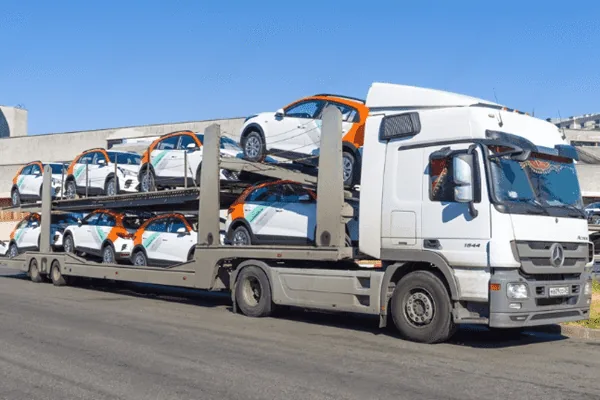
Open transport uses an uncovered trailer and is commonly selected for everyday vehicles. Enclosed service uses a covered trailer and may be appropriate for classics, collectors, luxury vehicles, or sensitive finishes. Availability depends on route, dates, and dimensions. Door-to-door means the closest safe, legal location a carrier can reach, not guaranteed access to a tight drive, controlled campus, or facility yard. Discuss staging needs at origin and destination.
A tailored quote needs the vehicle year, make, model, condition, complete addresses, preferred service, and date range. Include release rules and access restrictions. Ask what the price includes, how pickup estimates are made, payment timing, and cancellation terms. Tell dispatch promptly if an address or date changes.
Indiana also includes many county roads and locally maintained streets beyond the state highway network. A report about a major corridor may not describe a bridge limit or seasonal restriction on the final approach. Tell dispatch if the directions use a county road, private bridge, farm lane, or a site where commercial vehicles must check in. If a property owner wants the vehicle left at a gate, confirm that the carrier can legally and safely stop there and that the owner will meet the driver. For apartment and office pickups, ask whether a loading dock is shared with deliveries and book a time that leaves room for the trailer. A second contact who knows the property can help if the primary customer is traveling.
If an origin or destination is at a fairground, stadium, or seasonal attraction, confirm the entrance and whether a special event affects truck staging. Have the host identify an alternate lot if the usual pickup lane is occupied. For a vehicle moving between an Indiana city and a small county community, confirm which person has the keys and can authorize a handoff. Share both contacts with dispatch so the carrier can reach the correct person without disclosing private details to an unrelated site employee.
Indianapolis connects the state’s major routes, yet a pickup in a smaller community can require a different final-mile plan. I 65, I 69, I 70, I 74 and I 80/90 link Indiana with surrounding states. Provide both full addresses, note any gated facility or narrow road, and say whether the vehicle runs. These details help distinguish an interstate corridor transfer from a rural handoff away from the main route.
Learn more about open car shipping, enclosed car shipping and door to door transport, or request a free quote for your route.
Click any state to see local pickup & delivery details, or call +1 (888) 719-5659 for a route-specific quote.
Get an instant, no-obligation quote in minutes — licensed, bonded & insured nationwide.