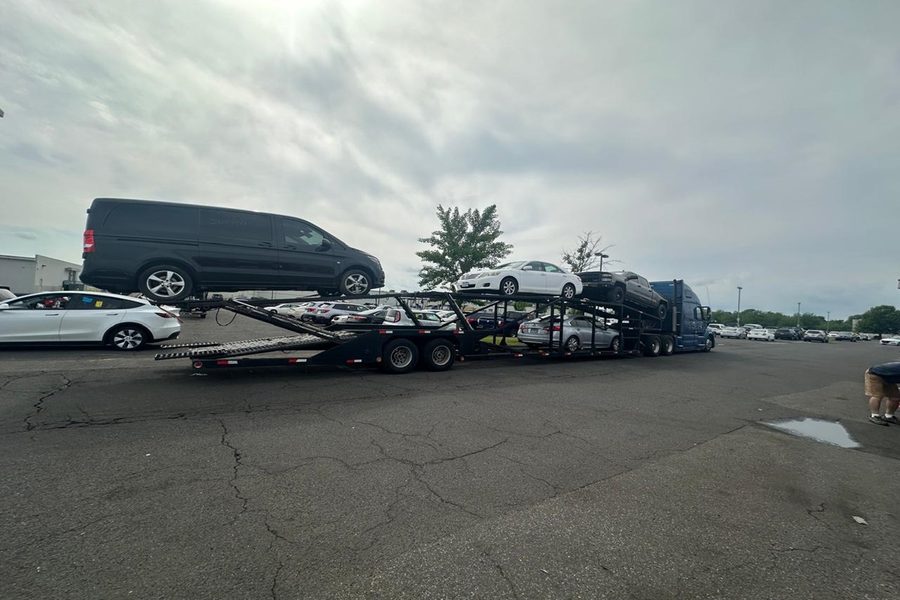
Book Colorado car shipping with a route-specific quote, open or enclosed service, and pickup planning for Front Range cities, mountain towns, or Western Slope addresses.
Real, live reviews pulled directly from our Google Business Profile.
Loading reviews…
Call +1 (888) 719-5659 or use our instant online quote form — most routes are dispatched within 24–48 hours.
Get an Instant QuoteA Colorado vehicle shipment may end along the Front Range, across the eastern plains, in a resort community, or at a remote mountain address. Give the exact pickup and delivery addresses, not just a city or county. Denver, Colorado Springs, Fort Collins, Grand Junction, and mountain towns represent different mileage and access conditions. If your destination is outside a metro, include the nearest main road and describe the last stretch to the property. A carrier needs to know where the car can actually be inspected and loaded.
I-25 runs through the Front Range, while I-70 crosses the state and enters high-country terrain; other highways connect the Western Slope and southern communities. A route on a map is only the start of a transport plan. Share road surface, steep grades, gates, turnaround space, and any seasonal access limits at the destination. A larger meeting area near a maintained road may be necessary when a carrier cannot safely enter a private driveway.
A pickup in Denver differs from one in Boulder, Fort Collins, Colorado Springs, Pueblo, or an outer suburb. Provide the actual municipality, street, ZIP, and place where the vehicle will be staged. A residential driveway, apartment garage, office property, dealer lot, and university area all have different rules. If a building requires a reservation or commercial vehicles must check in at a certain entrance, arrange that before confirming a window. Include a contact who can meet the driver and authorize access.
For moves running north or south along I-25, both endpoints still matter. A metro label alone can conceal a long last-mile drive or restricted street. If your vehicle is located in an outer community, write that city on the order rather than using Denver as shorthand. The correct address helps dispatch match the shipment to a route and gives the customer a more realistic pickup estimate.
A delivery west of Denver may involve mountain grades, weather exposure, and access that differs sharply from a Front Range address. Identify the destination town, road surface, slope, gate, and whether a large carrier has a place to turn around. A winter closure or active restriction can change the planned route. Do not expect a driver to continue into unsafe conditions or to enter a narrow road because a passenger car can make the trip. Arrange a safe alternate handoff before the shipment is dispatched.
CDOT provides COtrip and 511 for road and weather information, including active traction or chain laws. Check current alerts near the move, recognizing that conditions can change after a report. The driver and dispatch team decide if the route and handoff are safe at that time. Keep the destination contact reachable and allow a flexible window during unsettled weather. If your property is seasonal, confirm that the road and receiving area will be accessible when the carrier arrives.
Grand Junction, Durango, Montrose, Pueblo, and smaller towns serve different directions across Colorado. A western address may involve a long journey from the Front Range, while a southern destination may connect to another state or a remote property. Provide both city and ZIP, then add a precise street or highway reference. If the final road becomes gravel, climbs sharply, narrows, or has limited turning room, say so in the quote request. That lets the transport team consider a practical loading point in advance.
For a ranch, resort, cabin, or worksite, name the person who can guide the driver and confirm access. If an entrance is gated or requires an appointment, provide the procedure and operating hours. Do not use a landmark as the sole delivery address. The customer and carrier should agree on a reachable location rather than leave the driver to search for a private entrance after reaching the general area.
Colorado travel conditions can change with elevation and weather. A clear morning in one region does not establish that a mountain pass or a high-altitude driveway will remain accessible. Provide a date range when you can and keep the pickup and delivery contacts available. If snow, a closure, construction, or a traction restriction affects the planned route, the carrier may need to adjust timing or choose a safer meeting point. A requested pickup day should be treated as a target rather than a guaranteed arrival hour.
Use COtrip or call 511 for current roadway information before the shipment. CDOT posts alerts for traction and chain laws, and restrictions may be active on state highways when conditions warrant. Follow the current official information and dispatch instructions. If a home closing, lease end, or job start gives you a firm deadline, explain it early so the quote can address the actual schedule. A responsive local contact is especially useful when the owner is moving ahead of the vehicle.
If the car is at a dealership, auction, repair shop, storage facility, or worksite, confirm it is released and available during the pickup window. Ask what appointment, authorization, or check-in instructions the driver needs. Supply the exact entrance, hours, direct phone number, and any release number. Disclose whether the car starts, rolls, steers, and brakes; also mention low clearance, modifications, oversized tires, or accessories that change dimensions. These facts can affect equipment and loading plans.
Remove personal belongings and loose items, prepare the keys, and photograph existing condition before pickup. Walk around the car with the driver and review the inspection record. Keep a copy and repeat the inspection at delivery. If another person releases or accepts the vehicle, share the order information and make sure they can reach you. A careful record at both ends is useful regardless of whether the trip is across the Front Range or over the mountains.
Open carriers move standard vehicles on an uncovered trailer and are a common choice for many routes. Enclosed service uses a covered trailer and may fit a classic, collector, luxury, or sensitive car. Ask what is available for the exact origin, destination, and dates. Mountain addresses can limit access for any equipment, so clarify the road and staging area before choosing a service. Door-to-door describes the nearest safe, legal point a carrier can reach, not a guarantee of driveway entry.
A quote should include vehicle year, make, model, operability, complete addresses, service preference, and requested date range. Mention gates, facility appointments, steep roads, and any hard deadline. Compare the service description, pickup estimate, payment terms, cancellation policy, and update process. If you need expedited service, ask which dates can be confirmed for your actual route rather than relying on a generic promise of speed.
Denver and Colorado Springs connect Front Range routes, while foothill and high-country destinations can require different equipment access. I 25, I 70, I 76 and I 80 lead through changing elevations and weather. Tell us whether either address sits beyond a pass, on a steep road or in a seasonal community. The exact town and a backup meeting point help prevent a mountain driveway from becoming a last-minute access problem.
Learn more about open car shipping, enclosed car shipping and door to door transport, or request a free quote for your route.
Click any state to see local pickup & delivery details, or call +1 (888) 719-5659 for a route-specific quote.
Get an instant, no-obligation quote in minutes — licensed, bonded & insured nationwide.