01Houston pickup planning starts at the correct entrance
Houston’s large footprint means an address inside the metro can still be far from another Houston endpoint. Share the full street address, ZIP code, neighborhood or suburb, and exact vehicle location. Tell us whether the car is at a home, apartment tower, office campus, dealership, auction, warehouse, or secured industrial site. Gate codes, loading docks, garage clearance, security check-in, and permitted truck staging all affect where the carrier can meet you.
Ask property management where a multi-car trailer may load and whether a time reservation is needed. If the vehicle is on a tight residential street, agree on a wider legal alternative and confirm permission. Do not rely on “near downtown” or a freeway exit as a handoff address. Send the final meeting point to the recipient and keep a contact available during the pickup window.
02The final address matters across a very large metro
A Houston-area route may connect the Inner Loop with The Woodlands, Katy, Sugar Land, Pearland, Baytown, or a community farther toward the coast. Name the actual municipality and ZIP code at both ends. An origin in one suburb and a delivery in another can involve different freeway approaches and significant local mileage. Include the destination state for interstate transport and the nearest town for a rural property.
Describe whether the driver can reach the driveway, turn around, and stage safely. If a subdivision has truck limits or a private gate, get permission and provide instructions before dispatch. A nearby commercial lot can work only if loading is allowed. Confirm the recipient can get to the agreed location and knows the estimated delivery window.
03Industrial and port-area vehicle releases
Houston-area cars may be held at a dealer, auction, repair shop, fleet yard, port-adjacent facility, or industrial campus. Confirm the unit is released and ask about security procedures, commercial carrier authorization, safety equipment, appointment hours, and the correct gate. Provide lot or stock details and the direct number for the person responsible. A general business address may route a driver to an employee entrance that cannot accept a vehicle carrier.
Tell dispatch if the car does not run or has modifications that affect loading. Prepare keys and release documents before the agreed window. If a representative handles collection, ensure the facility recognizes their authorization. Do not schedule a pickup while a payment hold, title issue, or repair is still open.
04Rain and coastal conditions deserve a backup plan
Heavy rainfall, flooding, severe storms, and construction can disrupt access in parts of the Houston region. DriveTexas provides current highway conditions, closures, construction, traffic, camera, and weather information. Check it near the move, but remember a clear main road does not guarantee that a low driveway or private access road is usable. The driver makes the final call on safe equipment access.
If a planned site is affected, work with dispatch on a new date or a safe alternate staging point. Keep both contacts reachable and share any hard deadline before booking. An arrival estimate may change when storms or closures alter the route. Allow a window rather than arranging a handoff around an exact time that has not been confirmed.
05Apartment, gated community, and office access
Houston properties often have controlled entrances, visitor rules, loading docks, and assigned parking. Ask a leasing office or security desk whether a car carrier can enter and where it should stage. Check whether the vehicle is in a garage with a low clearance or a space that blocks loading. A transport truck may need to meet the customer at the gate or on a wider street instead.
Provide gate instructions through the agreed channel and identify who will open access. If a new location is required, verify it is legal and authorized before giving it to the coordinator. Let the receiver know the carrier’s approved address and ask them to be present. These details prevent a late reroute and help the driver avoid waiting at a restricted entrance.
06Match the transport option to your vehicle
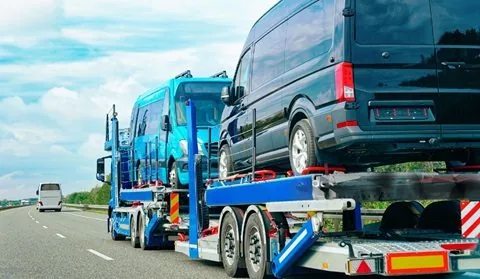
Open transport uses an uncovered trailer and is commonly selected for everyday cars. Enclosed transport provides a covered trailer and may suit a collector, classic, luxury, or sensitive vehicle. Availability depends on route, dates, and dimensions. A larger enclosed rig may need more room to stage at a Houston townhouse or industrial facility, so discuss access before selecting the service.
Door-to-door means as close as a carrier can safely and legally reach. It does not guarantee entry into a garage, private drive, gated community, or dock. Include vehicle year, make, model, condition, both addresses, date range, and service preference for a tailored quote. Ask what is included, when payment is due, and which cancellation terms apply.
07Keep the vehicle and both contacts ready
Report whether the car starts, rolls, steers, and brakes. Mention low ground clearance, oversized tires, mechanical problems, or modifications. Remove personal belongings and loose accessories; have keys ready. Photograph the vehicle and review the condition report with the driver before loading. Keep a copy and repeat the inspection when the car arrives.
Give the delivery contact the exact address, access details, and estimated window. If you cannot attend, designate an authorized person who can inspect and accept the keys. Keep a backup phone number available in case traffic, rain, or a site restriction changes the plan. If an address or date shifts, notify dispatch rather than relying on an informal message.
08Provide quote details before dispatch builds the route
For an accurate Houston quote, share year, make, model, operability, origin and destination addresses, preferred service, and a date range. Add community gates, facility release rules, loading permissions, and contact numbers. If the route includes a rural property or coast-side address, describe the final approach and alternate meeting point. A ZIP code alone cannot establish whether a carrier can load at the property.
Review the rate, included service, pickup estimate, payment arrangements, and cancellation terms before booking. Explain deadlines early and ask what can be confirmed. Once scheduled, keep the vehicle accessible and phone on. Complete information gives the coordinator a chance to resolve access or release questions before assigning a carrier.
For a delivery to a property affected by rain, identify an all-weather place where the truck can stage. Confirm that the alternative belongs to the recipient or that permission has been granted. This detail can keep the handoff possible when a low-lying drive becomes muddy or temporarily inaccessible.