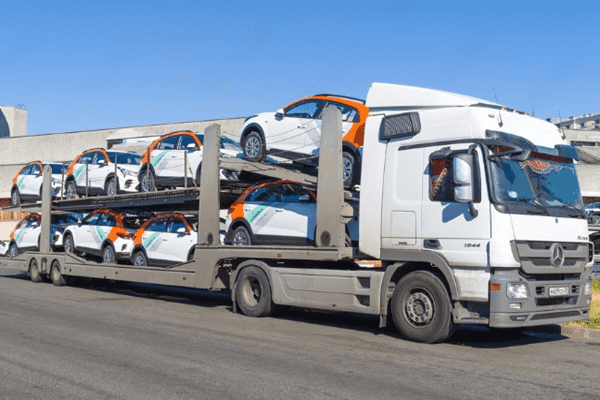
Move your car anywhere in Washington with a route-based quote, open or enclosed service, and a clear plan for metro, island, or mountain delivery.
Real, live reviews pulled directly from our Google Business Profile.
Loading reviews…
Call +1 (888) 719-5659 or use our instant online quote form — most routes are dispatched within 24–48 hours.
Get an Instant QuoteA Washington car shipment may start in the Seattle region, cross toward Spokane, serve the Olympic Peninsula, or end in a smaller community near the Canadian or Oregon border. Provide complete pickup and delivery addresses with ZIP codes. “Washington” does not tell a carrier whether the last miles follow a city street, a rural highway, a ferry terminal approach, or a mountain road. State the actual municipality and identify the person who can release or receive the vehicle.
I-5 follows the western side of the state, while I-90 crosses the Cascades toward Spokane. Other state routes serve the peninsula, central valleys, and north-south connections. WSDOT’s route maps and milepost tools can help orient customers, but dispatch still needs the exact address and access details. If your destination is outside a metro, provide the nearest maintained highway, the road surface, and whether a large truck can turn around at the property.
The Puget Sound region contains multiple cities and communities with different distances and access conditions. A Seattle pickup is not interchangeable with Tacoma, Everett, Olympia, or a location across the water. Write the municipality, street, ZIP, and loading point. For apartments, offices, and garages, confirm access rules and vehicle clearance. A large carrier may need a legal staging area on a wider street or in an approved lot if the destination block cannot accommodate it.
If an address is on an island or depends on a ferry crossing, tell the transport coordinator before booking. Ferry schedules, vehicle reservations, and the carrier’s route may require a distinct handoff arrangement. Do not assume a multi-car transporter will board or that a reservation is included. Decide whether the car can be delivered at an accessible mainland point, or discuss the ferry logistics explicitly with the provider and recipient.
A shipment from the west side to central or eastern Washington may cross a mountain pass. The final destination can be in Ellensburg, Yakima, Wenatchee, Spokane, or a smaller town beyond the pass. Give the actual endpoint and the date range; do not use “east of Seattle” as a substitute. Weather, construction, incidents, and pass restrictions can change travel time or access, particularly in winter. If the property itself is at elevation or on a steep road, describe that approach separately from the highway crossing.
WSDOT publishes current pass conditions, cameras, alerts, and route information. Check the latest notices near pickup, while understanding that conditions can change. The driver and dispatch determine whether the vehicle can be moved safely on the planned route. Provide a backup contact and ask the recipient to remain reachable if the carrier needs to delay or use a different meeting location. A firm schedule should be discussed with realistic contingencies rather than an exact-hour guarantee.
A delivery on the Olympic Peninsula or near the coast may involve a longer route from a main freight corridor and roads with limited staging space. Provide the town, street or highway address, and whether the final approach is paved and wide enough for a carrier. If a property is behind a gate, on a private road, or near a seasonal facility, describe its access hours and name someone who can meet the driver. A nearby public location may be more practical if the driveway is narrow or difficult to turn around in.
For ferry-dependent locations, identify the crossing and destination side at the quote stage. Ask who will arrange any ferry reservation, where the carrier will transfer the car, and whether a separate local driver is needed. Confirm the vehicle will be available at the handoff point. These steps are especially useful when the customer is relocating and may arrive after the car.
Spokane and the eastern counties are not simply extensions of a Seattle metro delivery. A vehicle may travel across the state and then continue to a rural home, farm, business, or recreation property. Name the receiving town and exact address; if the street is unfamiliar, include the nearest highway or crossroad. Tell the coordinator whether the access road is paved, maintained during winter, gated, steep, or narrow. A passenger car’s ability to reach a site does not prove a multi-car transporter can enter safely.
If an accessible lot or public road can serve as the handoff, identify it and confirm permission. Arrange for a local contact to meet the driver and guide the final approach. For dealer or storage pickups, verify release hours and authorization. Good final-mile information prevents an estimate based only on the long interstate distance from overlooking the actual delivery conditions.
Washington routes can be affected by construction, bridge restrictions, traffic, weather, and mountain-pass conditions. A requested pickup date is a planning range, not necessarily an exact-hour appointment. Keep both endpoint contacts available and agree on how dispatch will communicate changes. If a closure blocks the planned approach, the carrier may need to adjust timing or meet somewhere else. Do not ask a driver to use a closed pass or enter an unsafe driveway to preserve the original schedule.
WSDOT’s travel resources provide alerts, cameras, route times, weather notices, pass reports, and restrictions. Check the current information near the shipment, and follow the carrier’s operational guidance. If you have a closing, work start, or ferry booking with a firm time, tell the coordinator at the outset. Allowing a range where possible helps the shipment adapt to real road conditions.
A dealership, auction, storage facility, repair shop, or worksite may require a release code, appointment, or proof of authorization. Confirm the car is available and tell the carrier the precise entrance, hours, and contact. Share whether it starts, rolls, steers, and brakes, and mention low clearance, oversized tires, or modifications. For open transport, the vehicle rides on an uncovered carrier; enclosed service uses a covered trailer and may be preferred for a classic, luxury, collector, or sensitive car. Ask which option is available on the actual route.
Remove personal items and loose accessories, take photos of existing condition, and review the inspection form with the driver at both ends. Door-to-door service means the nearest safe, legal place the carrier can reach; it does not guarantee entry into every private lane or parking structure. Include all addresses, dates, vehicle details, and access notes in the quote. Review payment, pickup estimates, service terms, and cancellation conditions before booking.
Seattle and Tacoma connect Puget Sound routes, while Spokane and eastern communities lie beyond the Cascades. I 5, I 90, I 82 and I 405 carry distinct traffic and weather patterns. Include whether either end requires a ferry, sits on a steep street or depends on a mountain pass. These details affect the handoff more than a city-to-city mileage figure and should be settled before dispatch.
Learn more about open car shipping, enclosed car shipping and door to door transport, or request a free quote for your route.
Click any state to see local pickup & delivery details, or call +1 (888) 719-5659 for a route-specific quote.
Get an instant, no-obligation quote in minutes — licensed, bonded & insured nationwide.