Book Texas car shipping with options for your vehicle and schedule, whether your move connects Gulf Coast neighborhoods, inland cities, or far-flung communities.
Real, live reviews pulled directly from our Google Business Profile.
Loading reviews…
Call +1 (888) 719-5659 or use our instant online quote form — most routes are dispatched within 24–48 hours.
Get an Instant QuoteTexas spans Gulf Coast ports, large metro areas, pine woods, ranch country, Hill Country, and the far western desert. A shipment to Houston is not comparable with one to Dallas-Fort Worth, Austin, San Antonio, El Paso, Lubbock, or a ranch several miles from a small town. Provide complete street addresses and ZIP codes, plus the nearest community for rural endpoints. Identify the vehicle’s setting: home, dealer, auction, storage site, industrial yard, or job location.
Highway names such as I-10, I-20, I-35, I-45, and I-40 help orient a route but do not explain the final approach. Tell dispatch about private roads, gates, gravel, low clearance, turning space, and facility hours. If a large carrier cannot safely reach the property, agree on a permitted meeting location with room to load. A statewide estimate cannot account for the distance between far-flung Texas communities or the last miles beyond an interchange.
Coastal destinations can involve low-lying access roads, industrial gates, port activity, and changing weather. For a Houston-area pickup, state the neighborhood and whether it is in the city, an outer suburb, or a community farther along the Gulf corridor. Tell us if the vehicle is in a secured facility or a lot with strict commercial access. During periods of heavy rain or a coastal storm, a road or driveway may not be usable even when the main route remains open.
Check DriveTexas for current highway conditions, closures, construction, traffic, and weather-related hazards near the move. Reports are time-sensitive and do not certify that a private property is accessible. The carrier and dispatch decide whether conditions allow safe service. Have an alternate date or approved location in mind for a site affected by flooding or severe weather, and communicate any deadline before confirming a pickup range.
El Paso, Midland-Odessa, Amarillo, Lubbock, and smaller Panhandle or Permian Basin communities can be separated by long stretches of road. A vehicle going to a work camp, ranch, oilfield facility, or residence outside town may require specific entry instructions and a local escort. Provide the road name, nearest settlement, gate procedures, and whether a loaded transport trailer can reach the staging area. A vague town reference can leave the driver at the wrong site or add a substantial detour.
Confirm the receiving contact can travel to an alternate meeting point if private access is unsuitable. A broad level lot near a town may be more practical than a narrow lease road. Get permission before using any commercial or public property and send the exact address to the coordinator. Share both endpoints at quote time so dispatch can account for the actual mileage and route.
Austin, San Antonio, Waco, Temple, and surrounding communities each have different pickup access and local traffic. A university campus, downtown residence, dealership, suburban subdivision, and rural Hill Country home need different arrangements. Include the property name, building entrance, gate, access hours, and a phone number for the person who can meet the truck. If a steep driveway or winding road limits access, disclose it before booking and choose a safe staging point with the receiver.
A vehicle traveling between Central Texas cities may use major highways, but local construction, congestion, and event traffic can change a carrier’s arrival. Keep a date window, answer calls, and avoid treating an estimated time as an appointment. If a move is tied to a semester, job, or sale, explain the deadline early so the coordinator can discuss realistic availability.
The Dallas–Fort Worth area includes multiple cities, freeways, and rapidly changing construction zones. “DFW” is not precise enough to quote an origin or delivery. Supply the actual municipality, address, ZIP code, and property type. At an apartment or office complex, ask management where a transport trailer may load and whether a reservation or gate access is required. A narrow parking garage or private drive may be unsuitable even if the vehicle fits.
For a dealer or auction, confirm release authorization and the correct lot entrance. For a home in a planned community, check any commercial vehicle rules and identify an open staging area. If the destination is in Oklahoma or another neighboring state, list the state and exact endpoint. This level of detail allows dispatch to assess the route instead of assuming a convenient location near a freeway.
Heat, thunderstorms, flooding, ice in northern areas, wind, construction, and major incidents can all affect a long carrier route. TxDOT’s DriveTexas service reports road conditions, traffic, cameras, construction, and weather hazards. Check updates close to the move, but understand that conditions can change and a private access road may not appear in the state feed. A driver may delay or change the route when safety requires it.
Keep the vehicle accessible during the agreed window and ensure someone can respond at both ends. If a closure or weather event prevents access, coordinate a safe alternative through dispatch. Tell the coordinator about immovable deadlines before booking. A realistic estimate gives room for the distance across the state, while an unsupported exact-hour promise can create a missed handoff.
Disclose whether the vehicle starts, rolls, steers, and brakes. Note modifications, low clearance, oversized tires, mechanical faults, or attached equipment that may affect loading. A dealer, auction, repair shop, storage facility, or industrial site may require an appointment, release code, driver authorization, safety check-in, or designated pickup bay. Provide operating hours, stock or lot number, correct entrance, and a direct contact. Confirm the car is actually released before dispatch.
Remove personal belongings and loose accessories, have keys ready, and take photos before loading. Review the inspection report with the driver and retain it. Repeat the walk-around at delivery. If an agent handles the vehicle, ensure they are authorized to sign and can reach you with any question.
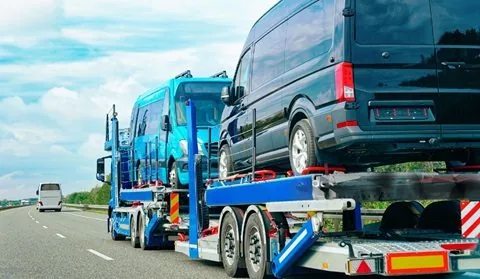
Open transport carries the vehicle on an uncovered trailer and is commonly used for standard cars. Enclosed service offers a covered trailer for a classic, collector, luxury, or sensitive vehicle. Availability and price depend on route, dates, and car details. Door-to-door service means the nearest safe, legal place the carrier can reach; it does not guarantee entry to every ranch road, gated community, industrial yard, or narrow urban street. Discuss access at origin and destination before selecting a service.
A quote request should include year, make, model, condition, complete addresses, service preference, and a useful date range. Add access instructions and release requirements. Ask what the price includes, how pickup timing is estimated, when payment is due, and what cancellation terms apply. If the route or location changes, update dispatch before the driver is assigned.
Dallas–Fort Worth, Houston, Central Texas, the Gulf Coast and West Texas are not neighboring pickup zones. I 10, I 20, I 30, I 35 and I 45 connect long journeys where timing depends on both route endpoints. Provide the actual towns rather than saying only “Texas,” and identify remote gates, large work sites or long driveways. Flexible dates can help when a carrier must cover substantial mileage between stops.
Learn more about open car shipping, enclosed car shipping and door to door transport, or request a free quote for your route.
Click any state to see local pickup & delivery details, or call +1 (888) 719-5659 for a route-specific quote.
Get an instant, no-obligation quote in minutes — licensed, bonded & insured nationwide.