Arrange Kentucky vehicle shipping for your actual route, with transport choices for daily drivers, collector cars, and rural destinations. Get a personalized quote.
Real, live reviews pulled directly from our Google Business Profile.
Loading reviews…
Call +1 (888) 719-5659 or use our instant online quote form — most routes are dispatched within 24–48 hours.
Get an Instant QuoteKentucky includes the Louisville and Northern Kentucky corridors, central Bluegrass communities, Appalachian routes in the east, and western river towns. A shipment to Louisville differs from a delivery in Lexington, Bowling Green, Paducah, Pikeville, or a rural property beyond a county seat. Give complete addresses and ZIP codes at both ends, then identify the nearest town if the site is remote. Specify whether the vehicle is at a home, dealership, auction, storage yard, or workplace.
The state’s rivers, hills, and winding roads can make the final approach more important than the highway distance. Describe the road surface, grade, gate, turning space, and seasonal access. If a long carrier cannot safely reach a private lane, select a permitted handoff area in advance. Provide the recipient’s contact and confirm they can get to that location. A quote based on only a city name will not account for a distant farm or mountain address.
Lexington, Frankfort, Georgetown, and nearby communities share some major routes but are separate pickup and delivery locations. A campus, horse farm, downtown street, and business park each need specific directions and permissions. If the car is at a farm, ask where a transport trailer may enter and whether a firm, level staging area exists. Describe gates, lane width, low branches, and who can direct the driver at the entrance.
For facilities connected with events or auctions, confirm opening hours and release authorization before booking. A scheduled carrier cannot collect a vehicle held behind a closed gate or missing paperwork. Share the actual destination if the move continues to a neighboring county or state. Avoid planning around a general “Bluegrass area” reference when the final address is outside the city.
Communities in the Appalachian portion of Kentucky can involve winding two-lane roads, steep driveways, bridges, and properties far from an interstate. Name the destination town and provide written directions from the nearest primary road. State whether a large trailer can pass, turn, and park safely. If the final drive is not suitable, arrange to meet in a wider lot or commercial area and confirm permission with the owner.
A local contact should remain available to verify access and guide the driver if navigation is uncertain. Seasonal rain, snow, or maintenance can change a narrow road quickly. Tell dispatch if the property is a cabin, mine, worksite, or gated community with its own entry rules. The alternate handoff should be set before a carrier begins the route, not chosen on a shoulder after arrival.
Paducah, Owensboro, Bowling Green, and smaller western communities serve different river and regional corridors. A vehicle going to a rural home near one of these cities needs an exact final address and a description of the last road. If a destination lies near a river crossing, give the full community and state at both endpoints so dispatch can plan the actual route. Do not assume a familiar city name identifies which side of a county or river holds the property.
For an industrial facility, share the truck entrance, appointment window, check-in procedure, lot number, and release contact. For a residence, confirm there is space to load without blocking a narrow roadway. An accessible public meeting point can be useful if a private driveway is steep or soft, but it must be approved and reachable by the receiver.
Kentucky’s traveler information resources report roadway incidents, construction, closures, and weather conditions. Check current information near the move, particularly for mountain routes, interstate construction, or storm impacts. Reports support planning but do not guarantee that a private road or driveway is safe at the time of arrival. The driver and dispatch make the operating decision when the route or staging point is unsuitable.
Keep a date range where possible and answer calls during the agreed window. If a closure or weather event affects the plan, coordinate a safe alternate time or location. Explain fixed deadlines before booking and ask what timing can be confirmed. Do not rely on an exact-hour promise that has not been written into the service arrangement.
For a dealer, auction, repair facility, or storage property, confirm that the vehicle can be released to a carrier on the planned date. Provide the correct gate, hours, required paperwork, release code, stock or lot number, and a direct on-site contact. If a farm or worksite requires an escort, arrange that in advance. Make sure the person releasing the vehicle has keys and authority to complete the inspection.
Tell the coordinator if the car starts, rolls, steers, and brakes. Disclose modifications, low clearance, oversized tires, or mechanical faults that change loading. Remove personal belongings and loose accessories, take photos, and review the condition report with the driver. At delivery, inspect the vehicle and keep the paperwork for your records.
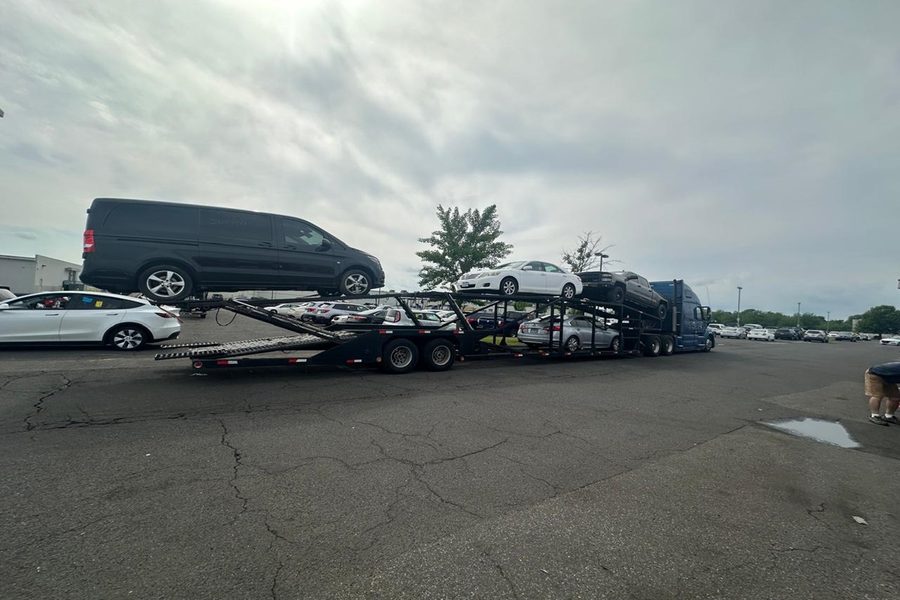
Open transport carries standard vehicles on an uncovered trailer. Enclosed service offers a covered trailer and may suit a classic, collectible, luxury, or sensitive car. Ask about availability for the actual route and requested dates. A large carrier may need more room at a mountain home, horse farm, or narrow city lot. Door-to-door means the nearest safe and legal place the transporter can reach, not a promise to enter every private driveway or facility.
For a useful quote, provide vehicle year, make, model, condition, full addresses, date range, and service preference. Add access, gate, and release details. Ask what the amount includes, when payment is due, how arrival estimates are calculated, and what cancellation terms apply. Report route changes promptly so dispatch can update the plan.
Rural Kentucky addresses may be described locally by a farm name or a familiar landmark rather than a postal street number. Send the formal address and a written final-turn description together, then add the contact who can answer when a driver is nearby. If directions include a narrow creek crossing, steep switchback, or gate that must remain closed for livestock, point that out before the route is assigned. Ask the property owner to identify an alternate location on a maintained road if a loaded carrier should not enter. At a business or event venue, confirm the operating calendar and the time a vehicle can be released. A clear handoff reduces the chance of a second trip through a region where the nearest available carrier may be far away.
Louisville, Lexington and Bowling Green anchor routes across Kentucky, while eastern communities may involve Appalachian grades and narrower approaches. I 24, I 64, I 65, I 75 and I 69 connect the state to neighboring markets. Share the exact town and whether a steep driveway or rural road reaches the vehicle. If a trailer cannot safely turn, plan a level public handoff before accepting a pickup window.
Learn more about open car shipping, enclosed car shipping and door to door transport, or request a free quote for your route.
Click any state to see local pickup & delivery details, or call +1 (888) 719-5659 for a route-specific quote.
Get an instant, no-obligation quote in minutes — licensed, bonded & insured nationwide.