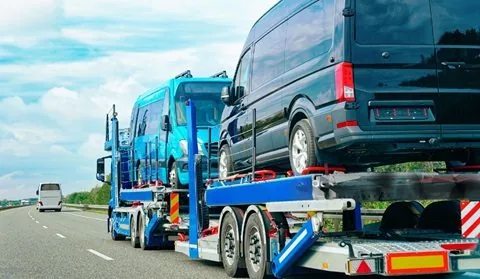
Get Ohio car shipping with a quote shaped around your pickup city, delivery address, vehicle type, and preferred dates. Start planning your move today.
Real, live reviews pulled directly from our Google Business Profile.
Loading reviews…
Call +1 (888) 719-5659 or use our instant online quote form — most routes are dispatched within 24–48 hours.
Get an Instant QuoteOhio includes dense Northeast Ohio communities, the Cleveland and Lake Erie shore, Columbus in the center, Cincinnati and the Ohio River, and rural counties between those metros. A shipment to Columbus differs from one to Toledo, Akron, Dayton, Cincinnati, or a home outside a small town. Provide full pickup and delivery addresses with ZIP codes. For rural sites, identify the nearest community and actual entrance rather than a county or highway name.
I-70 and I-71 cross the state, while I-75 and I-77 serve major north-south routes. These corridors orient a route but do not reveal access at an apartment, factory, farm, or private drive. Describe gates, loading space, road surface, grades, and turning room. If the carrier cannot safely reach the exact property, choose an authorized meeting location and verify the receiver can attend.
Cleveland, Akron, Canton, and Youngstown shipments may start at homes, dealerships, auctions, ports, or industrial sites. For a controlled facility, provide the correct gate, operating hours, appointment rules, lot or stock number, and direct release contact. Ask whether carrier authorization or safety check-in is required. A large yard can have multiple entrances, and a street address alone may send the driver to an employee gate that cannot accept a transporter.
For residential locations, describe parking density, narrow streets, shared driveways, and overhead clearance. Confirm a car carrier may legally stage at the proposed handoff point. Lakefront or downtown buildings may require loading reservations. If the site is unsuitable, agree on a wider permitted area nearby before dispatch, then distribute the precise address to both customer and carrier.
The Columbus region is a major connection point, but Ohio shipments also serve Newark, Zanesville, Mansfield, Marion, and rural properties outside the beltway. Enter the actual municipality and destination address. A vehicle headed to a college campus, business park, new subdivision, or farm requires different approach notes. Share any restricted entrance, construction access, loading dock, or local contact who can guide the driver.
A rural final leg may involve an unpaved lane, a gate, low branches, or limited space for a truck to turn. Confirm whether a loaded carrier can reach the address and whether the road is usable after rain or snow. If not, select a public or commercial meeting site with permission. Provide a direct route from the nearest main road so the handoff does not depend on an approximate map pin.
Cincinnati, Dayton, and the Ohio River communities have their own access patterns. Hillside streets, narrow older neighborhoods, bridge approaches, and busy commercial districts can affect loading. Identify the exact neighborhood and ask property management where the carrier can stage. At an office campus or medical center, confirm the correct entrance and whether commercial vehicles need advance authorization. A passenger-car garage may not have enough clearance for a transport trailer.
For a destination in northern Kentucky or southeastern Indiana, list the state and full address. Do not leave the state line implied by a metro label. Tell dispatch if a river crossing or a local approach has restrictions. If the car will be delivered outside the city, include the actual town and who can meet the driver. This gives a quote a real endpoint and helps prevent a last-minute address correction.
ODOT’s OHGO service displays traffic incidents, construction, weather hazards, cameras, travel delays, and other roadway information. Check the planned route near pickup and delivery, especially around active work zones or busy metro interchanges. Conditions can change before a carrier arrives, and an online map cannot establish whether a private driveway is safe for a loaded truck. The carrier and dispatch make the final operating decision.
Keep a realistic date window and make sure both contacts remain reachable. If a closure or incident changes the approach, work through dispatch on an approved alternative. Share any firm deadline when requesting the quote and ask what timing can be confirmed. Do not plan a closing, flight, or facility appointment around an unconfirmed exact hour.
Tell the coordinator whether the car starts, rolls, steers, and brakes. Disclose low ground clearance, oversized tires, modifications, mechanical concerns, or attached equipment. Dealers, auctions, repair shops, and storage facilities may require a release code, appointment, advance carrier notice, or specific pickup bay. Confirm the vehicle is ready and provide the correct entrance, hours, lot number, and contact who can authorize release.
Remove personal belongings and loose accessories, prepare the keys, and photograph the vehicle before loading. Review the condition report with the driver and keep a copy. Repeat the inspection at delivery. If another person attends for you, ensure they have authorization, the order details, and enough time to walk around the vehicle.
Open transport carries cars on an uncovered trailer and is commonly selected for everyday vehicles. Enclosed service provides a covered trailer and may suit a classic, collectible, luxury, or sensitive model. Ask about availability for the exact route and date range. Larger equipment may require more staging room at a narrow street, gated subdivision, or business dock. Door-to-door means the closest safe and legal point a carrier can reach; it does not guarantee entry to every private road or garage.
A route quote needs the year, make, model, operability, complete addresses, service preference, and dates. Include facility rules and access limitations. Ask what the price includes, how pickup timing is estimated, when payment is due, and what cancellation terms apply. Update dispatch if either endpoint changes.
Across the state, the person releasing the car and the person receiving it may be several hours apart. Confirm both have the same dispatch number and know which date range applies at their end. If the vehicle is being purchased privately, verify the seller has accepted the pickup plan and will be present with the keys. For a seasonal property, ask whether road maintenance or a locked association gate changes access during the month of the move. If a city-side meeting point is proposed, check opening hours and the owner’s loading rules. Keep paperwork together with the vehicle details so a substitute contact can complete the handoff if your schedule changes. These details are particularly useful when the route crosses multiple Ohio metro areas and the driver cannot return after a missed release window.
Ohio moves often connect Cleveland, Columbus and Cincinnati, but each metro has different access and parking conditions. I 70, I 71, I 75, I 76 and I 80/90 form important long-haul paths. Tell us whether the car is in a downtown garage, suburban driveway or smaller community away from the corridor. That distinction can affect equipment access and the location where a carrier can safely load.
Learn more about open car shipping, enclosed car shipping and door to door transport, or request a free quote for your route.
Click any state to see local pickup & delivery details, or call +1 (888) 719-5659 for a route-specific quote.
Get an instant, no-obligation quote in minutes — licensed, bonded & insured nationwide.