01A Jackson quote starts with the actual city and entrance
Jackson pickups may be downtown, in a residential neighborhood, at a university or hospital, in an office park, or at a dealership outside the central grid. Provide the full street address, ZIP code, property name, and exact vehicle entrance. Mention gates, security desks, loading docks, parking decks, one-way access, and any space limit. A transporter requires a legal place to stop and enough room to maneuver, not just a curb near the destination.
Ask the property contact where commercial vehicles may stage and whether loading must be reserved. If the location is too tight, select a permitted alternative nearby and give dispatch the exact address. Keep a local contact reachable. “Jackson metro” or “near I-55” does not identify where the driver should meet the customer.
02Tell dispatch whether the destination is outside Jackson
The vehicle may actually be in Ridgeland, Madison, Clinton, Pearl, Brandon, or a rural part of central Mississippi. Use the municipality shown on the postal address and include the ZIP. A subdivision gate, commercial campus, and county-road home each require different instructions. If the final road is unpaved or narrow, explain whether a multi-car trailer can pass and turn around.
For travel to the Gulf, Delta, or another state, provide the exact destination and state. A city-center estimate may be wrong for a home well beyond the metro. If an alternate meeting site is necessary, confirm permission and ensure the recipient can reach it. Share the same location with both the carrier coordinator and receiving contact.
03Government, medical, and commercial properties
Jackson has large institutional and commercial locations with controlled access. Confirm whether the driver needs a visitor credential, advance carrier authorization, a loading reservation, or a particular gate. Provide office hours, building or lot number, release paperwork, and the direct contact for the person who can open access. For a campus pickup, ask whether a public entrance will direct the carrier to a restricted road or garage.
A vehicle at a warehouse or employer fleet should be staged where the truck can safely load without blocking daily operations. Arrange an escort if required. If a car is in an underground garage, verify clearance and bring it to an outdoor meeting point when needed. These arrangements must be set before the carrier is assigned.
04Use weather and road reports as conditions evolve
Mississippi weather can bring heavy rain, thunderstorms, flooding, wind, and tropical disruptions, while road work or incidents can change the arrival route. Check current MDOT traffic information near the scheduled window. A highway report will not guarantee a low-lying driveway or private access road is clear. The carrier decides whether a loading point is safe for its equipment.
Keep your phone available and vehicle ready. If the planned address becomes inaccessible, coordinate an alternate date or approved location through dispatch. Share hard deadlines when you request pricing rather than expecting the driver to meet an exact time regardless of conditions. A flexible pickup range helps account for both long routes and local weather.
05A ready vehicle and release contact prevent missed pickup
If the car is at a dealership, auction, repair shop, storage yard, or employer, confirm release approval and business hours. Share the correct entrance, stock or lot number, direct contact, appointment rules, and any authorization code. Resolve payment or paperwork holds before dispatch. A driver should not be sent to a gate where no one can release the vehicle.
Describe whether it starts, rolls, steers, and brakes. Disclose low clearance, oversize wheels, modifications, or mechanical concerns. Remove personal items, prepare the keys, and photograph the vehicle. Review the pickup inspection report with the driver and save a copy. At delivery, inspect the car again before completing the exchange.
06Select open or enclosed service with access in mind
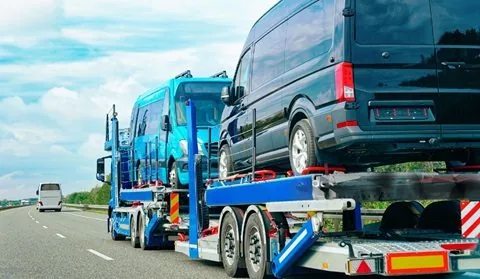
Open transport uses an uncovered trailer and works for many standard vehicles. Enclosed service provides a roof and may suit a classic, collector, luxury, or sensitive car. Ask about availability for the exact route and date. Equipment size can affect access to a downtown property or secured business entrance. Door-to-door means the closest safe, legal place the carrier can reach, not guaranteed access to every garage, gated road, or loading dock.
A useful quote includes the vehicle, condition, exact pickup and delivery addresses, preferred service, and date range. Add site rules and contact names. Ask what the amount includes, how pickup timing is estimated, payment terms, and cancellation rules before confirming.
07Prepare the recipient and inspection at delivery
Give the delivery person the address, gate or entrance instructions, estimated window, and dispatch contact process. Confirm they can meet the driver and inspect the vehicle. If you will be unavailable, appoint an authorized local person and share the order details. Keep a backup phone number available if a work shift or weather disruption affects the primary contact.
Compare the vehicle with the pickup report, note any concern, and keep the paperwork. If an address changes, send the update through dispatch so the carrier has current directions. A clear plan is particularly helpful when a delivery ends outside Jackson, where a closed gate or missed contact can add a long detour.
If the car is held at a public institution or employer, verify which department controls vehicle release and whether a visitor pass is required. A general building receptionist may not be able to authorize a carrier. Get the release contact’s direct number and pass the driver’s expected window to that person. For a home in a low-lying area, ask someone local to confirm that the approach is dry after heavy rain. Choose a safe alternate on a maintained road if water or soft ground makes the property inaccessible. At delivery, ensure the receiving contact has time to examine the vehicle rather than trying to sign quickly before leaving for work.
If the origin is a private seller, agree on a release window that leaves time for the carrier to inspect and load. Make sure the vehicle is parked in an accessible area and not blocked by another car. For apartment deliveries, ask management whether the carrier can enter or if the resident must meet outside. Confirm a secondary location if the driveway is too narrow. Send the final address and a responsive phone number to dispatch so a driver can resolve a gate or entrance question before leaving the main route.