01Start by confirming Missouri or Kansas
Kansas City is a bi-state metro, so a city name alone leaves an important question unanswered. State whether the pickup and delivery are in Missouri or Kansas, then provide each municipality, street address, and ZIP code. A home in the Northland, downtown building, suburban business park, or property across the state line has different access and routing needs. Include the exact entrance, gate, and property contact.
Ask whether a transport truck can use the driveway, loading dock, or visitor lot. A multi-car trailer needs room to turn and inspect the vehicle. If the location is tight, select a permitted alternative with adequate staging space. Share it with the receiver and dispatch before booking. This prevents a driver from reaching the wrong side of the metro or a gate that does not admit commercial carriers.
02Metro neighborhoods have different loading conditions
Downtown towers, older residential blocks, campus properties, and industrial facilities each require specific instructions. Check one-way streets, garage clearance, curb limits, loading dock hours, and security procedures. Ask property management which entrance accepts a long trailer and whether an appointment or credential is required. A passenger vehicle can enter a parking structure that is too low or tight for the carrier.
If a curbside handoff is not workable, arrange a legal nearby location and confirm permission from its owner. Give the customer and carrier the same address. If an event or construction closure could affect access, identify a second meeting point before the scheduled window. The driver should not need to improvise at an interchange or block a travel lane.
03The destination may be outside the Kansas City area
A vehicle leaving the metro may be headed to Columbia, Springfield, St. Joseph, the Ozarks, or a rural property in either state. Enter the real destination rather than a regional shorthand. Provide the nearest town and final road when the address lies outside a city. Describe surface, gate, grade, bridge limits, and turnaround room so dispatch can decide whether a large carrier can reach the property.
If the exact driveway is unsuitable, select a town-side meeting location with permission and adequate space. Confirm the receiving contact can get there and remain available. An interstate exit is a route reference, not a delivery address. Full endpoints help build a quote around the actual miles and handoff conditions.
04Industrial and dealer pickups should be cleared in advance
The metro includes dealerships, auctions, fleet yards, and industrial properties with distinct release procedures. Ask whether a carrier must be pre-authorized, scheduled, or checked in at a particular gate. Provide business hours, lot or stock number, release paperwork, and a direct contact. Confirm the vehicle is not on a payment or title hold. A booked carrier may not be able to wait for a facility to resolve a missing authorization.
Tell the coordinator if the car starts, rolls, steers, and brakes. Mention modifications and low clearance. Prepare keys and remove loose belongings. Photograph the condition and review the inspection report with the driver before loading.
05Use local travel information to anticipate delays
MoDOT’s traveler map and Kansas City Scout provide information for regional traffic, incidents, work zones, flooding, cameras, and road conditions on their respective sides of the metro. Check the correct jurisdiction near the move. A public traffic report cannot guarantee access to a private driveway or building entrance, and conditions can change before a multi-stop carrier arrives. Keep your phone available and allow a date range.
If a road closure affects the planned site, work through dispatch to choose a safe alternate. Share firm deadlines before booking and ask what timing can be confirmed. Do not arrange a handoff around an exact hour unless a specific appointment is documented.
06Choose transport and staging together
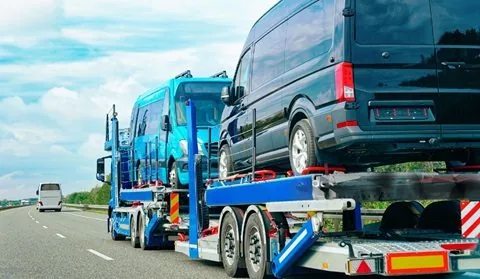
Open transport carries vehicles on an uncovered trailer and suits many standard cars. Enclosed transport places the car in a covered trailer and may suit classic, collector, luxury, or sensitive vehicles. Availability depends on the route, vehicle, and dates. Door-to-door means the closest safe and legal place the carrier can reach; it does not promise access to every downtown curb, garage, gated drive, or private lot.
Provide vehicle details, condition, both addresses, service choice, and date range for a useful quote. Include the state at each endpoint, access restrictions, and any facility release rules. Ask what the rate includes, how pickup estimates work, payment timing, and cancellation terms. Update dispatch if an address or date changes.
07Keep a contact ready at both sides of the state line
The pickup and delivery contacts should each have the correct state, address, approved entrance, and estimated window. Confirm that someone can meet the driver, inspect the vehicle, and sign the report. If you cannot attend, appoint an authorized person and share the order details. A backup number is useful if a gate attendant or property manager must be reached.
At delivery, compare the car against the original inspection and document any concern. Keep photos and paperwork. If the property or state-side handoff changes, tell dispatch so the carrier receives one clear plan. This is especially important when both parties use “Kansas City” informally for separate municipalities.
Because the metro crosses a state line, confirm that every contact uses the same state-specific address. A buyer may call a Kansas suburb “Kansas City” while the seller means the Missouri city. Put the state beside both ZIP codes in messages and paperwork. If the carrier will meet at a location near the border, share its municipality and entrance, not simply the nearest interchange. Ask a building or lot manager whether loading is permitted and whether a time window is reserved. For a residence with a narrow drive, move the vehicle to the approved spot before the truck arrives. A contact who knows the property should stay reachable until the driver has completed the condition walk-around.
For a pickup in a shared garage or apartment building, ask whether the car can be brought to the surface entrance before the truck arrives. Confirm that management permits a commercial trailer to wait in the service area and provide any check-in instructions. A private lot may be a good alternative only if the owner approves loading and the carrier has adequate room to turn. If the location lies close to the state boundary, spell out the state on the handoff address and directions. At delivery, give the recipient the same entrance and contact details so the driver does not receive competing instructions from two sides of the metro.