01Clarify which Laurel address will receive the carrier
Laurel sits in a busy corridor where mailing addresses, county lines, and nearby communities can create ambiguity. Provide the full street address, ZIP code, county or local community when relevant, and exact location of the vehicle. State whether the car is at a home, apartment complex, business park, dealer, storage facility, or institutional property. If the trip connects to Washington or Baltimore, identify the actual destination rather than using a metro label.
Tell dispatch where the carrier can stop and whether the property has a gate, loading reservation, garage clearance limit, steep driveway, or narrow turn. Ask management whether commercial vehicles may enter and which entrance is approved. If the internal road cannot fit a trailer, select a permitted outdoor meeting point in advance. Confirm its hours and ensure the receiver can get there. A direct phone number for the person who can open the gate or direct the driver is more helpful than a general property line.
02Corridor traffic and local access are separate planning questions
I-95 and US 1 help orient trips through the Laurel area, but local traffic and property entrances determine the carrier’s final approach. A route estimate should use both complete endpoints, not just a nearby highway interchange. If a pickup or delivery is time-sensitive, tell the coordinator the real deadline and ask for a practical range. Do not promise an exact arrival time based on a passenger-car map estimate.
Maryland CHART and 511 provide current traffic conditions, closures, work zones, weather events, and cameras. Check updates near the move and pass relevant disruptions to dispatch. A traffic feed cannot tell whether a private road is open or a loading dock is reserved. If construction affects the planned curb, use a safe, approved alternate location. Keep the receiver available in case the arrival shifts. A carrier should not be asked to wait at a ramp or travel lane while contacts decide where loading is allowed.
03Apartment and townhouse entrances may not admit a transport trailer
Managed communities in Laurel may use gates, internal loops, parking structures, and visitor rules designed for regular passenger vehicles. Ask the association or property manager whether a carrier can enter, where it may turn, and whether advance notice is required. Confirm garage clearance before arranging an indoor pickup. If the car is below street level, bring it outside to a property-approved spot when possible.
At a townhouse, clear other vehicles from the driveway and identify a safe turnaround. A cul-de-sac may be too tight if cars are parked on both sides. If the carrier should stay outside the community, agree on a larger permitted lot with enough space to inspect the car. Confirm the owner allows commercial loading and tell the receiver how to reach the selected site. Send the exact entrance to dispatch, not merely the community name.
04Campus, health, and office sites require release coordination
A workplace or campus may have different gates for visitors, deliveries, and secured operations. Confirm with the facility which entrance allows a vehicle carrier and whether security needs the driver’s name, an appointment, or an escort. Give the person coordinating the release a direct number. An office address may not identify the yard where a fleet vehicle is stored.
For a dealer, auction, or repair facility, provide the stock number or lot reference, hours, release status, and required paperwork. Resolve holds before dispatch and make keys available. If the car does not run, tell the provider what functions are unavailable. A ready contact who can show the vehicle and sign the inspection report prevents a lost stop when the carrier is traveling on a multi-address route.
05The destination beyond Laurel needs its own access check
A Laurel pickup may lead to another Maryland town, Washington, Virginia, or a distant state. List the actual destination address, state, and ZIP code. For a rural delivery, describe the final road, surface, grade, gate, and turning area. For a city property, verify loading rules and building access just as carefully as at the origin. Do not assume a destination is truck-accessible because it is close to a main route.
If the delivery site cannot safely accept a large carrier, arrange a permitted alternate and tell the receiver. A property manager or local contact should confirm availability before the driver is dispatched. Give both sides the exact address and arrival range, and maintain a backup phone number. Complete endpoint information ensures a quote covers the actual route and the final handoff instead of ending at a generic metro boundary.
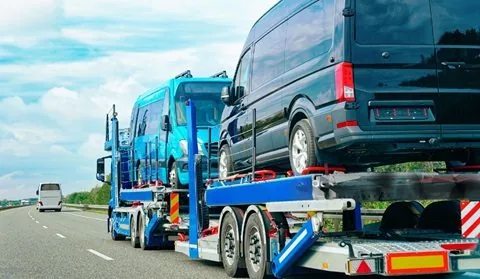
Open carriers are commonly used for everyday vehicles and transport them on uncovered trailers. Enclosed service places the car in a covered trailer and may fit a classic, collector, luxury, or particularly sensitive vehicle. Availability depends on route, dimensions, and date range. State the year, make, model, and whether the car starts, rolls, steers, and brakes. Disclose low clearance, oversized tires, modifications, roof accessories, or any non-running condition.
Include both addresses, preferred dates, access restrictions, and service type when requesting a quote. Door-to-door means the closest safe and lawful point available to the carrier; it does not ensure entry into a garage, gated office park, or narrow private street. Ask what the estimate includes, how pickup timing is set, payment terms, and cancellation conditions. Update dispatch if the vehicle condition or destination changes after booking.
06Prepare condition records and a contact plan
Remove personal items and photograph the vehicle in good light before pickup. Capture all sides, roof, glass, wheels, and existing marks. Keep keys ready. Review the carrier’s condition report with the driver and retain your copy. At delivery, inspect before signing and note any issue on the paperwork.
If a family member or employee handles the exchange, confirm that the person can release or accept the car and provide the order number and entrance instructions. Keep one coordinator responsible for updates to dispatch. If traffic, a gate, or construction changes the meeting point, distribute a single written revision to both ends. A receiver who knows the correct site can help complete the handoff without leaving the vehicle at an unattended curb.
For a pickup close to a county boundary, repeat the state and ZIP code in every appointment message. The carrier may use a different road approach depending on which side of the community the vehicle is on. If an apartment, school, or office lot is shared among multiple buildings, name the specific building and its visitor entrance. Ask the contact to confirm that the loading space is still available on the planned day, especially if another delivery could occupy it.