01Give the carrier the Little Rock street and entrance
Little Rock handoffs can take place downtown, in a residential neighborhood, at a university or medical campus, in an office park, or at a dealership. Supply the full address, ZIP code, building name, and exact entrance. Mention one-way streets, parking decks, loading docks, gates, security procedures, and turning restrictions. A transporter needs legal space to stage and maneuver; a curb that serves a car may not fit the trailer.
Ask a property manager where commercial carriers are allowed and whether a dock must be reserved. If the location is tight, choose an approved nearby handoff point and confirm permission. Give that address to dispatch and the recipient. Do not use “near the river” or “off I-40” as a substitute for an exact pickup location.
02The metro stretches beyond the city limits
A Little Rock request may actually involve North Little Rock, Conway, Benton, Bryant, Maumelle, or a rural community in central Arkansas. Provide the municipality and ZIP code at each end. A subdivision gate or private drive can limit access, while a farm or business outside town may add miles beyond a city-center estimate. Describe the final road, its surface, gate procedure, and turning room.
For a shipment leaving Arkansas, name the destination town and state. If the recipient cannot meet at a remote property, select a public or commercial lot with authorization and enough space. Keep the contact reachable and make sure they know the alternate plan. An accurate endpoint lets dispatch build a route around the real distance instead of assuming the entire region is one location.
03River and campus addresses need practical staging
Addresses near the Arkansas River, downtown bridges, campuses, or government buildings may have limited stopping areas or access rules. Ask the site contact whether a car carrier can enter and where it may wait. University and hospital properties can direct commercial vehicles to a service gate, require advance notice, or prohibit loading during certain hours. Provide those instructions and the contact name before a carrier is assigned.
If the vehicle is in a parking deck, check clearance and arrange to bring it outdoors if needed. A public-facing address may route the driver to a pedestrian entrance. When a dock or curb is unavailable, arrange a permitted alternate point with room for inspection. Share the final address with the person receiving the car.
04Use IDrive Arkansas and leave room for route changes
ARDOT’s traveler information directs motorists to IDrive Arkansas for current traffic, construction, road closures, lane restrictions, and width limitations. Check the planned route close to the move. A highway update does not tell you whether a private road or local driveway is accessible, and conditions may change before the truck arrives. Keep the pickup and delivery contacts available and the vehicle ready throughout the window.
If a work zone, incident, or storm affects the handoff, work with dispatch to choose a safe alternative. Tell the coordinator about a hard deadline early and ask what timing is possible. An exact arrival hour should not be assumed unless the carrier has confirmed it.
05Make sure the car is cleared and ready to load
At a dealership, auction, repair shop, storage lot, or fleet site, verify the car is released and identify the person who can hand over the keys. Provide hours, lot or stock number, correct gate, and any carrier authorization requirement. If paperwork or payment is still pending, delay the pickup request until the facility confirms release.
Tell dispatch whether the car starts, rolls, steers, and brakes. Note low clearance, modifications, oversized tires, or mechanical concerns. Remove personal belongings, prepare the keys, and photograph the condition. Review the inspection report with the driver at both ends. A representative can attend if they have authority and know the order details.
06Select a trailer service for the car and access point
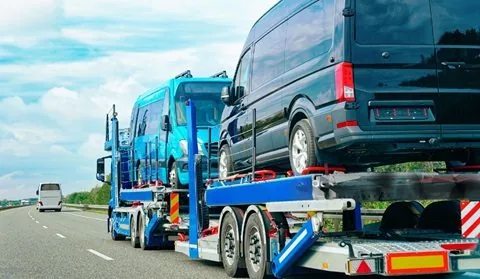
Open transport carries vehicles on an uncovered trailer and is a common option for standard cars. Enclosed transport offers a covered trailer and may be chosen for classics, collectors, luxury models, or sensitive finishes. Ask about availability for your route and dates. A larger rig may not fit a narrow neighborhood street or loading dock. Door-to-door means as close as the carrier can safely and legally reach, not guaranteed access to every garage or private property.
Share vehicle details, condition, full origin and destination, service preference, and a useful date range to receive a quote. Add facility release rules and access notes. Review what the rate covers, payment timing, pickup estimates, and cancellation terms before booking.
07Give the receiving person time and information
Send the delivery contact the exact address, entrance, staging instructions, estimated window, and how dispatch will communicate. Confirm they can meet the driver and inspect the car. If you will be away, appoint an authorized local person and share the order details. Keep a backup phone number available if work or traffic affects the primary contact.
At handoff, compare the vehicle with the pickup inspection and document concerns before signing. Keep photos and paperwork. If the address changes, notify dispatch so the driver gets one accurate plan. These steps reduce the chance that a car arrives at a closed gate or unattended curb.
For a downtown or medical-campus delivery, confirm whether the carrier should use a service entrance rather than the address shown on the main building. Ask if temporary construction affects the driveway or visitor lot. If the car is being released by an office, get the name of the employee authorized to hand over keys; a general front desk may not control the vehicle. For a suburban pickup, check that a long trailer can enter the subdivision and turn without blocking access for other residents. If the customer will be at work, appoint a representative who can arrive during the full time window and has permission to accept the car.
If the pickup or destination is near a riverfront, confirm that the selected street and lot remain accessible during planned road work or an event. A nearby address may be separated by a one-way route or restricted entrance. Ask the property contact to identify the carrier approach and not just the customer parking entrance. If the site has a loading time limit, give dispatch the full window and a backup contact who can meet the driver if the primary person is delayed.