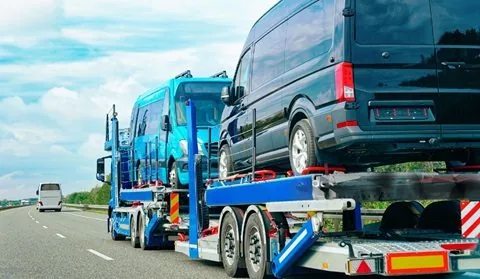
01Choose an Omaha handoff address a carrier can actually use
Omaha is a major Nebraska transport destination, but it is not one universal loading point. Give the full street address and ZIP code and identify whether the vehicle is at a downtown building, apartment complex, home, dealership, auction, or business yard. Explain any gate, access card, reserved bay, low clearance, parking control, or limited turnaround. A car-hauling rig needs enough room to stop, inspect the vehicle, and load safely; a regular parking space may not provide it.
If the property cannot accommodate a large trailer, propose a nearby location only after confirming permission and truck access. Send the approved alternate address to the coordinator and recipient. Avoid directions such as “near the Old Market” or “off Dodge Street” without an exact location and a contact who can meet the driver.
02Connect the metro route to the actual delivery city
I-80 and the Omaha area’s interstate connections can make the city a practical origin or destination for a long-distance move. The route still depends on where the car goes next. A vehicle bound for Lincoln, Fremont, Norfolk, western Nebraska, Iowa, or another state needs a complete endpoint, not a highway junction. Include the city, state, street address, and ZIP code, then note whether the final approach is a private road or facility entrance.
If the delivery lies outside the metro, confirm the recipient’s availability and whether a long trailer can reach the property. A farm or rural home may need a staging point in town. Agree on that place before dispatch, verify it is suitable for loading, and make sure the recipient can reach it during the arrival window.
03Downtown curb and loading space cannot be assumed
An on-street handoff in Omaha may require more planning than an open residential driveway. The city provides a loading-zone permit process for reserving on-street space for loading or delivery. Check applicable rules with the property manager or city before using a curb as a carrier staging area. For hotels, offices, apartment buildings, and event sites, ask where commercial vehicles may wait and whether a loading reservation is required.
A permitted private lot can be easier if it has sufficient turning room and allows a transport truck, but permission should be explicit. A garage may be too low or tight for the trailer even when the vehicle itself can park inside. Share photos or measurements if clearance is uncertain, and ask dispatch to confirm whether the proposed location can work.
04Neighborhood and commercial access call for different instructions
A house in a wide suburban subdivision can be a simple handoff, while a narrow street, cul-de-sac, or shared drive may prevent a long rig from positioning safely. Tell the coordinator about parked-car congestion, street width, overhead branches, steep entries, and turning restrictions. If a neighborhood entrance has a gate or security desk, provide instructions and arrange for the customer to meet the driver outside if needed. Do not leave access arrangements until the carrier arrives.
For a commercial yard, provide the correct gate, business hours, check-in procedure, vehicle row, and the employee who can release the keys. Confirm that the company authorizes carrier access. Omaha publishes truck route information and maintains road closure and lane-restriction information; use current local guidance where relevant, and follow posted restrictions rather than routing a large truck onto an unsuitable street.
05Plan around metro traffic, construction, and event days
Traffic on the interstate approaches and city arterials can change the estimated arrival, especially when construction or a large event affects access. Keep a realistic pickup window, be available by phone, and avoid scheduling a vehicle handoff at the same time as a building’s strict move-in or loading cutoff unless the carrier confirms it. If there is a hard deadline, explain it when requesting the quote. A firm arrival time should only be relied on when explicitly confirmed.
Check Nebraska 511 for road conditions, travel speeds, closures, construction, crashes, and available camera views. Omaha also publishes local closures and lane restrictions. These resources help with planning, but conditions evolve and dispatch may adjust the route. If the original meeting point becomes blocked, coordinate an alternate address through the carrier rather than improvising at a curb.
06Prepare a vehicle from a dealership, auction, or home
For a purchase or facility pickup, verify the car is paid for or otherwise cleared for release, and ask whether the carrier needs an appointment or release number. Share lot or stock details, the correct entrance, business hours, and a direct contact. If the car is not ready, tell the coordinator before dispatch. At a home pickup, clear the vehicle area and make sure the person meeting the carrier can access the keys and paperwork.
Disclose whether the vehicle starts, rolls, steers, and brakes, along with any low clearance, modifications, or mechanical issues. Remove personal belongings and loose items. Photograph the car, walk through its condition with the driver, and keep the inspection record. A designated representative can handle the exchange if you cannot attend, provided they are authorized and prepared.
07Select a transport style for the car and staging space
Open transport carries vehicles on an uncovered trailer and is a common choice for everyday cars. Enclosed transport offers a covered trailer that may suit a collector, classic, luxury, or sensitive vehicle. Ask about route and date availability and describe any special handling needs. The trailer must be able to stage at both addresses, so mention tight streets, garage limits, and loading restrictions before selecting service.
Door-to-door means the closest safe and legal point a carrier can reach, not guaranteed access to every curb, garage, private drive, or restricted loading zone. If the exact Omaha address will not work, settle on an approved alternative. Include both complete addresses, vehicle details, condition, preferred service, and date range when requesting a quote.
08Make the delivery easy to receive and inspect
The person receiving the vehicle should know the address, estimated window, and how dispatch will send updates. Confirm that they can meet the carrier, access the loading point, and sign the condition report. If you will be unavailable, appoint a local representative and give them your order details in advance. Keep a backup contact in case traffic or a change in the route shifts the estimate.
Compare the delivered vehicle with the pickup inspection and document concerns before completing the handoff. Keep photos and paperwork. If the date or address changes, notify dispatch so the driver gets a consistent plan. These simple steps can prevent a city delivery from turning into a search for a person or a legal place to unload.
09Request a quote with the information that sets the real price
Share the year, make, model, operating condition, origin and destination addresses, preferred service, and a useful date range. Add building or facility access rules, loading permission, and the names and numbers of pickup and delivery contacts. If a move must happen by a certain date, explain why and ask which parts of the schedule can be confirmed.
Review what the quote includes, how pickup estimates work, payment timing, and cancellation terms before booking. If a coordinator suggests a different meeting point to fit truck access, verify the location is acceptable to you and the receiver. A complete request gives dispatch a chance to address Omaha’s street and staging realities before the truck is assigned.