01Buffalo’s lakefront address and the actual suburb both matter
A Buffalo shipment can begin in the city, in a nearby town, at a university, or at a business or storage property. Put the full street address, ZIP code, neighborhood or municipality, and exact vehicle location in the request. “Buffalo area” may cover a city block, a suburban driveway, or a location well beyond the urban core. If the mailing city differs from the municipality, include both so dispatch knows which local roads lead to the car.
Describe whether the vehicle is parked outdoors, in a garage, in a dealer lot, or behind a gate. Apartment buildings may have loading reservations and garages that cannot fit a trailer. A narrow residential street may need an alternate site with more room. Confirm the property’s rules, the permitted entrance, and the person who will meet the driver. A local contact can verify snow clearance, temporary parking rules, and access shortly before pickup.
Buffalo-area winter weather can leave snowbanks, ice, and reduced street space even when a primary road is open. Make sure the car is cleared and accessible, keys are available, and the driver can reach a level place to inspect and load it. Tell dispatch if a driveway is steep, shaded, unplowed, or narrowed by snow storage. If the street or property is not workable, agree on a maintained paved location rather than expecting a carrier to test a slippery approach.
Check 511NY and local conditions near the scheduled date; the system includes road and winter travel information. A roadway report does not reveal whether a private lot has been cleared or a building has changed its loading rules. Keep a flexible pickup range during active weather and update the receiver if timing shifts. A backup contact who lives nearby can confirm the last few blocks and help avoid a wasted trip when access has changed since booking.
02The Thruway corridor is not the whole western New York route
I-90 connects Buffalo with other markets, but the carrier still needs the true town and final address. A move may continue toward Niagara County, the Southern Tier, Rochester, or another state. State the destination rather than using Buffalo as a regional shorthand. The approach can involve a local road, business gate, or private driveway that has different clearance and turning conditions from the highway.
NYSDOT’s 511NY service provides travel information, closures, construction, incidents, and road conditions. Review it near pickup and tell dispatch about a major disruption. Let the carrier choose a route appropriate to its equipment. If a work zone or weather event affects the agreed meeting place, identify a safe alternate with permission. The receiving person should have the complete address and stay reachable during the revised arrival range.
03Campus, hospital, and dealership handoffs need their own entrance
A Buffalo university, medical campus, dealer, or auction may separate visitor access from service and vehicle release areas. Confirm which gate accepts a transport carrier, whether security needs advance notice, and if the driver requires a reservation or escort. Give dispatch the site contact’s direct number and the correct lot or stock reference. A public campus address may take navigation to a pedestrian entrance rather than the vehicle staging area.
Verify the car is released and ready before pickup. Make keys available and disclose whether it starts, rolls, steers, and brakes. If a facility closes at a fixed hour, request a date range that allows for carrier delays and clarify its after-hours policy. At a hospital or office, confirm loading is allowed in the proposed area. A prepared release reduces time at the gate and keeps the driver from waiting while staff locate the vehicle.
04Rowhouse streets and suburban drives call for different staging
A city block may have parked cars, one-way traffic, and little room for a long trailer to turn. A suburban home may offer a driveway but still have a steep approach, low branches, or an association gate. Explain the setting instead of assuming the carrier can stop at the front door. Ask a local person to check the space and move other cars before pickup.
If the location is not truck-friendly, choose an authorized lot or wider street where loading is legal. Confirm permission, operating hours, turning room, and a clear place for inspection. Send the receiver exact directions and a direct phone contact. Do not use a bridge approach, highway shoulder, or snowbank-narrowed curb as a substitute for a planned handoff.
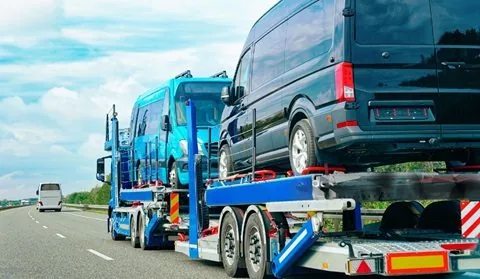
Open transport moves many everyday vehicles on an uncovered trailer. Enclosed transport uses a covered trailer and may suit a classic, collector, luxury, or sensitive car. Availability depends on the lane, season, vehicle dimensions, and dates. Disclose low ground clearance, oversized wheels, modifications, roof accessories, and any mechanical problem. State whether the car starts, rolls, steers, and brakes; a non-running vehicle may require special loading equipment.
For a quote, provide year, make, model, full addresses, condition, service preference, and date range. Include garage restrictions and any alternate staging point. Door-to-door service reaches the closest safe and legal place accessible to the carrier, not every garage, private road, or restricted curb. Ask what the quote includes, how timing is estimated, payment terms, and cancellation conditions.
05Photograph the car and keep a reachable receiver
Before loading, photograph every side, the roof, glass, wheels, and existing marks in clear light. Remove personal belongings and keep keys ready. Review the condition report with the driver and retain your copy. At delivery, inspect before signing and note any concern on the paperwork. Keep the carrier’s contact details and both inspection records.
If someone else handles the exchange, provide the order number, address, entrance, and authority to release or receive the vehicle. Confirm that person can meet the driver throughout the estimated window. If a snow closure, building rule, or traffic event changes the location, update dispatch and both endpoints. A current written plan helps a shipment finish cleanly whether the destination is downtown, suburban, or farther along the New York corridor.
If the car is stored for the season, make sure it can be started and moved after sitting in cold weather. Check battery condition, tire pressure, and whether snow removal has left a clear path to the vehicle. Tell the carrier if a property manager must open a gate or bring the car out of a locked garage. A local person should be ready to help if the vehicle has been parked for an extended period.