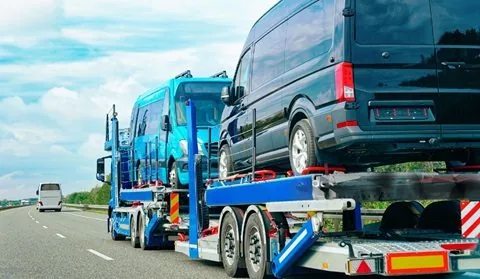
01A Yonkers shipment begins with the street and property entrance
Yonkers includes dense residential blocks, apartments, commercial corridors, and homes with different access conditions. Provide the street address, ZIP code, neighborhood, cross street, and exact location of the vehicle. A building name or nearby landmark alone may point to more than one entrance. State whether the car is outside, in a garage, at a dealership, or behind a private gate. If the destination is in another Westchester community or New York City, give that municipality rather than using the metro label.
Ask management where a carrier can load and whether it needs an appointment, service entrance, visitor pass, or loading reservation. Check garage clearance and turning space before asking a trailer to enter. If a curb is restricted or too narrow, arrange an approved alternative with room to inspect. Give the driver the entrance and a direct number for the person who can meet them.
02Regional road access and local stopping rules both shape timing
Yonkers connects with major roads serving Westchester and New York City, but traffic and the final neighborhood streets influence when a carrier arrives. Supply both complete addresses and the actual endpoint municipality. Do not rely on passenger-car navigation to select a commercial route; road suitability depends on the transporter and trailer. If the shipment crosses into the city or another county, include that information before the quote is prepared.
NYSDOT’s 511NY service and NYC traffic resources provide information about incidents, construction, closures, and conditions. Check near the move and notify dispatch about an important change. A traffic map does not confirm that a residential curb allows commercial loading or that a private lot is open. Keep the receiver reachable if an incident shifts the arrival window. Avoid directing a driver to wait on a highway shoulder, ramp, or restricted curb.
03Apartment garages and co-op rules need a carrier check
A parking garage may have low clearance, a steep ramp, a tight turn, or rules that exclude commercial transport vehicles. Ask the property manager whether a carrier can enter and whether the car must be brought outside. If there is a loading dock, confirm it is intended for vehicle transport and can be reserved during the arrival range. Give dispatch the approved entrance and the name of the person who authorized access.
For a co-op, condominium, or managed apartment, ask about security registration, commercial vehicle hours, and where the driver may wait. A standard resident parking permit does not establish that a trailer can stop. If the building cannot accommodate the truck, arrange a nearby permitted lot with sufficient pavement and maneuvering space. Confirm the property owner’s permission and make sure the vehicle owner can get there.
A residential street can be busy or narrow even when the address is easy to find. Check curb restrictions, street cleaning, temporary construction, bus stops, and parking controls for the planned day. Move other cars or arrange a meeting place where the carrier can stop without obstructing traffic. The driver needs space to inspect and load the vehicle; a brief curb gap may not be enough.
A nearby business or public lot should not be treated as available without permission. Confirm its hours, entrance, surface, and room for a large trailer to turn. Tell dispatch and the receiver exactly where to meet. If a road closure changes the approach, ask the coordinator to approve an alternate before anyone redirects the truck. A safe backup site is more useful than an informal instruction to “pull over nearby.”
04Set the complete destination beyond Westchester
A Yonkers pickup can lead to another Westchester town, an upstate address, another borough, or an interstate destination. Include the full destination city, state, and ZIP. For rural delivery, explain the final road surface, driveway grade, gate, and turnaround. For another urban property, confirm loading access and building rules. A complete destination allows the provider to price the entire route and consider the actual final approach.
If either endpoint uses an alternate meeting point, confirm that the location is permitted and that the relevant contact can attend. Share directions from a main road and a backup phone number. The recipient should know whether the carrier will arrive at the listed street or a nearby staging site. Do not assume a carrier can leave the vehicle unattended at an apartment entrance or narrow residential curb.
05Vehicle condition affects equipment and the estimate
Open transport is often used for standard cars. Enclosed service uses a covered trailer and may suit classic, collectible, luxury, or sensitive models. Availability depends on route, dimensions, and dates. State the year, make, model, and whether the car starts, rolls, steers, and brakes. Disclose lowered suspension, oversized tires, body changes, roof equipment, or mechanical faults.
Provide both full addresses, requested window, service choice, and access notes when seeking a quote. Door-to-door means the nearest safe and legal access point available to the carrier; it does not assure entry to a garage, co-op driveway, or restricted street. Ask what is included, how pickup estimates are determined, payment terms, and cancellation policy.
06Keep the release record clear at both ends
Take dated photos of the car’s exterior, roof, windows, wheels, and existing damage before pickup. Remove belongings, have keys ready, and review the inspection report with the driver. Retain your copy. At delivery, inspect before signing and record any issue on the receipt.
If a building employee, seller, or family member handles the exchange, provide the order details and authority to release or accept the car. Keep one contact responsible for dispatch updates. If traffic or a property rule changes the handoff, send the same written plan to both endpoints. A clear record and a reachable receiver help close the move without confusion over the street, garage, or approved alternate.
A move within the lower Hudson area may cross several municipal boundaries even when the mileage is short. Put the receiving town and state on the order and ask the contact there to verify which entrance serves the vehicle. If the delivery is to a managed residence, confirm the truck can wait without blocking other residents and that the loading approval covers a transport carrier. An appointment for household movers may not cover a vehicle trailer. Share the approved time range and contact with dispatch.